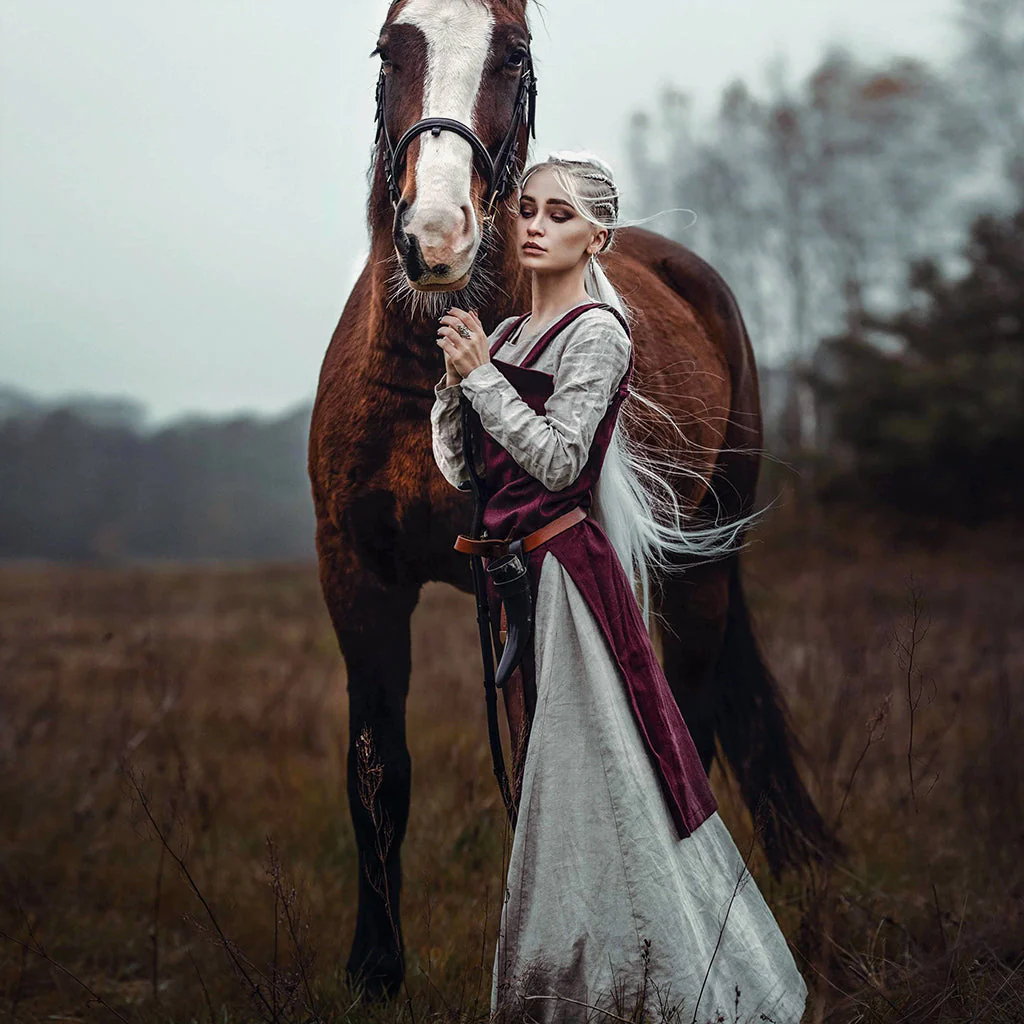
Viking Apron Dress, Red
A really nice, high quality apron in wool with a matching linen dress. Known as a Smokkr, this type of dress was a common garment among the Viking women who combined it with a pair of turtle brooches with stringed beads. The brooches are used to fasten the shoulder straps in the front. They can also be stitched in place quite easily.
- Based on historical sources
- This set includes a wool apron and a linen dress
- Color of Apron: Red
- Color of Dress: Natural
- Material Apron: 100% felted tabby weave wool (350 gsm)
- Material Dress: 100% Baltic Linen (260 gsm)
- Tortoise brooches, beads or other accessories not included
MOTHER EARTH
The apron is made from recycled wool that is a great ECO-friendly option! Aided by modern-day quality controls and meticulous sorting before shredding and weaving, it saves on the energy and water needed to produce non-recycled wool. The process also eliminates the use of chemicals.
Product Information
Product Information
Shipping & Returns
Shipping & Returns
Description
A really nice, high quality apron in wool with a matching linen dress. Known as a Smokkr, this type of dress was a common garment among the Viking women who combined it with a pair of turtle brooches with stringed beads. The brooches are used to fasten the shoulder straps in the front. They can also be stitched in place quite easily.
- Based on historical sources
- This set includes a wool apron and a linen dress
- Color of Apron: Red
- Color of Dress: Natural
- Material Apron: 100% felted tabby weave wool (350 gsm)
- Material Dress: 100% Baltic Linen (260 gsm)
- Tortoise brooches, beads or other accessories not included
MOTHER EARTH
The apron is made from recycled wool that is a great ECO-friendly option! Aided by modern-day quality controls and meticulous sorting before shredding and weaving, it saves on the energy and water needed to produce non-recycled wool. The process also eliminates the use of chemicals.